So this has been a busy couple of weeks for me! I am pleased to inform you that I will be moving to a new office in Peoria, IL next week. My new office is AlignLife of Peoria and can be found at 4812 N Sheridan Road behind Walgreens. I am very excited to join the team and begin serving the Peoria community to the best of my abilities and beyond. If you want to find out more info about my new office, click here.
Ok, so let's talk about some natural remedies I've found very useful so far.
**Caution should always be used before using any home remedy and you should always consult your doctor before use.**
Tea Tree Oil has anti septic, anti bacterial, and anti fungal properties so it has a variety of uses, however it is a very strong product and for this reason shouldn't be used for long periods because it can cause skin irritation, redness, itching, or blistering. Some people may have sensitivies or allergic reactions to tea tree oil so if you have any reaction stop use and consult your doctor. Tea Tree Oil can alter hormones levels as well so consult your doctor before use, especially if you are pregnant or breastfeeding. Tea Tree oil should not be taken internally as it can cause decreased immune function, diarrhea, or other serious conditions. I personally like to dilute the solution with water or olive oil depending on method of use due to the aforementioned reasons. I mixed 1 tsp tea tree oil with 1 tbsp of olive oil and used a small makeup brush to apply it over the nail and voila! Nails are nourished, moisturized and if you apply over a course of 3 days you'll notice decreased yellowing and brittle quality to the nail. I've used this on my 1 year old's toe nails with great results as well! A randomized controlled study from the Journal of Family Practice had the same results. A 25 to 50% solution of tea tree oil and water can be sprayed with a spray bottle on the foot especially between the toes and will reduce symptoms of athlete's foot. I'd recommend drying the foot completely after applying as fungus can flourish in moist environments. Don't use for more than a week as skin irritation will occur. A 10% to 25% solution of tea tree oil and water can also be sprayed onto cuts or bedsores to help encourage healing and prevent infection. I used this solution myself after vaginal delivery and found the tissues healed very quickly and the cold solution also helped with pain post delivery. Tea tree oil treatments are becoming all the rage for hair products, and for good reason! If applied on the scalp (I prefer diluting with water or olive oil) for a few days it can reduce dandruff or a shampoo with tea tree oil can reduce it as well. A study in the Department of Dermatology at Royal Prince Alfred Hospital in Australia compared a 5% tea tree oil gel with 5% benzoyl peroxide lotion for open and closed acne lesions and it was found that both showed promising results. However the benzoyl peroxide lotion performed better over a 3 month period of time.
Honey has wound healing and anti-bacteria properties as well. In previous times it was used to help seal wounds from infection. Mixed into hot water or tea can help to sooth an irritated throat or it can also be used on cuts/acne. I found a single spoonful is a sweet treat that's great for children over 1 year old who are suffering from a cold or sore throat and it's usually quite easy to get them to swallow. It can also be mixed with petroleum jelly to rehydrate and heal those chapped lips.When mixed with lotion or olive oil can help to heal damaged skin and remoisturize as well.
Salt is great for helping with cleaning and it solutions mixed with water can also help to soothe irritated tissues. Salt can be applied on a new carpet stain to help soak up the fluid before it soaks in. Warm water mixed with 3 tbsp salt and gargled by mouth 2-3x per day can help to sooth irritated tissue and can also help to loosen phlegm and mucus. This can help to flush out irritants and possibly even decrease duration of sickness.
Parsley chewing can help to reduce bad breath by fighting the odor causing bacteria that like to take residence in your mouth.
Chamomile is very calming and can help decrease stomach cramps by decreasing spasms in the stomach and lower intestine. Chamomile tea can has a variety of uses but I've found its also great for calming you to reduce stress or before bed in addition to reducing stomach cramps or upset.
Lemon juice is also great for cleaning and revitalizing the body as well. If you take a small bowl of water mixed with 1-2tbsp lemon juice and place in the microwave for 3-5 minutes you should be able to wipe the microwave clean very easily afterwards! Lemon juice can also be used on carpet stains and wiped up after 5 minutes. Lemon juice has been found to help switch an acidic body environment/condition to a more alkaline one and for this reason can be used to help with flu, hangovers, and reflux. I recommend taking a shot glass of it or adding it to hot tea or hot water with honey to lessen the sourness. Lemon juice mixed in a glass of cold water is great for stomach upset and I found it very useful during pregnancy for the "empty stomach" feeling following nausea or first thing in the morning.
Well folks, there's plenty more uses for the above that I mentioned but I thought I'd share what I could before I get back to packing!!
Saturday, March 3, 2012


Thursday, February 23, 2012
Your Body is Amazing!
Did you know that your body is amazing? There are millions of processes going on in your body right this second that you don't even have to think about and yet they are being performed each and every second of every day.
For instance, right now the muscles of your chest and the small muscles between your ribs are contracting and expanding as you take a deep breath in without even thinking about it and your diaphragm ( a thin sheath of muscle) is moving upward and downward inside of your chest to help draw air in and push it out of your lungs for more efficient breathing. In the meantime the alveoli of your lungs are expanding to twice their normal size so that the millions of blood vessels that line them (about 1500 miles worth) can absorb enough oxygen to supply every cell in your body. WOW, right?
 Let me wow you some more. Here's a few amazing facts about your body.
1) A block of bone the size of a matchbox can support 9 tons which is 4 times as much as concrete!
2) When you sleep you grow 8mm by nutrient and water absorption in the discs of your spine, but you shrink back down after gravity forces press that hydration back out of your discs in the morning.
3) The focusing muscles of your eye move 100,000 times a day, if you worked your legs that much you'd have walked 50 miles.
4) The human body puts off enough heat in 30 minutes to boil a half gallon of water.
5) Female ovaries contain half a million egg cells but only about 400 ever mature to be able to create new life.
6) Male testicles produce 10 million sperm cells each day, which is enough to repopulate the planet in 6 months.
So how does your body know how to do all those things? Innate intelligence, that's how! Your body has an innate intelligence that conducts every process in your body every second of the day and also knows how to react and adapt to the changing environment around you. That is what makes us amazing and why scientists all over the world spend their lives trying to understand the body and its complex processes every day!
Innate intelligence is the driving force behind your body's ability to regulate your body temperature, blood sugar, the amount of nutrients you need to absorb from your food, the amount of oxygen your muscles need to survive without dying, the speed of blood being circulated through your body depending on what you're doing at that moment, and even the amount of sleep you need each night. It's also the force that directs your bones how to remodel to support your weight and directs your skin how to heal after you get a paper cut.
Want to hear some more weird and amazing facts about that body? Click here.
For instance, right now the muscles of your chest and the small muscles between your ribs are contracting and expanding as you take a deep breath in without even thinking about it and your diaphragm ( a thin sheath of muscle) is moving upward and downward inside of your chest to help draw air in and push it out of your lungs for more efficient breathing. In the meantime the alveoli of your lungs are expanding to twice their normal size so that the millions of blood vessels that line them (about 1500 miles worth) can absorb enough oxygen to supply every cell in your body. WOW, right?
1) A block of bone the size of a matchbox can support 9 tons which is 4 times as much as concrete!
2) When you sleep you grow 8mm by nutrient and water absorption in the discs of your spine, but you shrink back down after gravity forces press that hydration back out of your discs in the morning.
3) The focusing muscles of your eye move 100,000 times a day, if you worked your legs that much you'd have walked 50 miles.
4) The human body puts off enough heat in 30 minutes to boil a half gallon of water.
5) Female ovaries contain half a million egg cells but only about 400 ever mature to be able to create new life.
6) Male testicles produce 10 million sperm cells each day, which is enough to repopulate the planet in 6 months.
So how does your body know how to do all those things? Innate intelligence, that's how! Your body has an innate intelligence that conducts every process in your body every second of the day and also knows how to react and adapt to the changing environment around you. That is what makes us amazing and why scientists all over the world spend their lives trying to understand the body and its complex processes every day!
Innate intelligence is the driving force behind your body's ability to regulate your body temperature, blood sugar, the amount of nutrients you need to absorb from your food, the amount of oxygen your muscles need to survive without dying, the speed of blood being circulated through your body depending on what you're doing at that moment, and even the amount of sleep you need each night. It's also the force that directs your bones how to remodel to support your weight and directs your skin how to heal after you get a paper cut.
Want to hear some more weird and amazing facts about that body? Click here.
Monday, February 20, 2012
Neck Wrenching Pain and Stiffness
How many times have you woken up in the morning with "a crick in your neck" or pain so bad that you just want to roll back over and go to sleep? You are not alone, it's estimated that 70% of people will have neck pain at some point in their lives. Neck pain is not only a literal pain in our necks but it can also effect productivity and our quality of life too. Many of those people will ignore their neck pain but some will get treatment from a doctor or other health care practitioner. But how do you know what treatment is right for you?
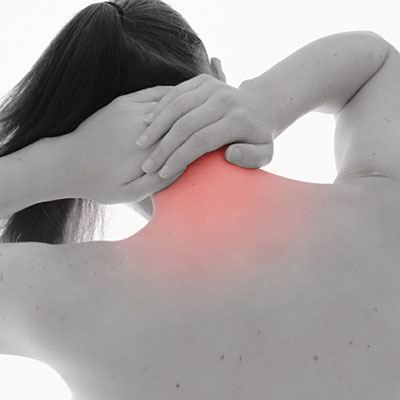 In a recent study published by the annals of Internal Medicine in January of 2012, researchers looked at treatments such as medication, home exercise, and spinal manipulative therapy (chiropractic adjustments) to find out what is most effective in the treatment of acute and subacute neck pain. 272 participants with neck pain for 2-12 weeks were assigned to treatment group for 12 weeks and then results were measured for short and long term effectiveness over 52 weeks. Read the full study.
So what did those results show? After 12 weeks of treatment, the spinal manipulative therapy (SMT) group had a greater reduction in pain that the medication group. In addition, the SMT treatment group showed greater reduction in pain than both the home exercise and medication groups at 52 weeks. The SMT group also reported higher global improvement, patient satisfaction with care, and assessed physical function than the medication group. The home exercise group also showed a greater reduction in pain than medication and after 12 weeks a higher percentage of participants reported pain reduction of at least 75% over medication.
So this tells us that in cases of acute or sub-acute neck pain, spinal manipulative therapy is superior to medication in short and long term situations for pain reduction, global improvement, patient satisfaction with care, and physical function. Home exercise is also a valuable tool and faired better than medication in pain reduction in short and long term use as well as having a higher patient satisfaction rating.
So if you do have neck pain, talk to your doctor about referring you to a chiropractor or to another specialist for some home exercises! Your local chiropractor would be more than happy to talk to your medical doctor if there are any concerns with treatment.
Monday, February 13, 2012
Jawbreaker Jabber
After reading a blog post from Lisa White about clenching her teeth while lifting weights, I decided to do a quick blog post about jaw pain. Many of us clench our teeth or jaws when stressed or while working out. This causes the muscles in the jaw to clench and load the temporomandibular joint (TMJ) which can lead to dysfunction and even headaches if done chronically. We have many muscles that work together to help us open and close our jaw as well as move it side to side and even thrust it forward as well. These muscles also help us to chew our food and talk as well. Below find a cutaway picture of the jaw and the main muscles that "run the show". The jaw itself is made up of two main bones the maxilla (the upper jaw) and the mandible (the L shaped lower jaw) that come together in the temporomandibular joint (TMJ). The TMJ is cushioned by a small disc that's similar to the discs in your spine except that it is shaped like a backslash on your keyboard and its anchored by ligaments. This disc should allow the top of the mandible to glide gently over it without grinding or clicking, but many people that have degeneration or have injured this joint have grinding, clicking, or popping sounds emitted upon opening of the jaw.

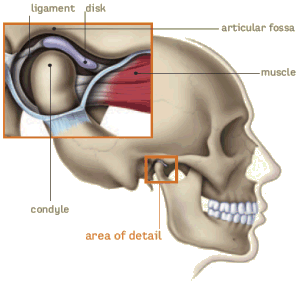
Notice the temporalis muscle that runs along your "temple" and the side of your head. Many headache sufferers report having pain in this area and frequently link it to high stress levels. This muscle not only helps to clench your jaw tight but also has blood vessels that run in close proximity to it. Due to this anatomical mapping, many people that report throbbing headaches or a dull ache in the "temple" area after a high stress situation may be experiencing a side effect of temporalis muscle spasm from jaw clenching. Incidentally, there are also a few conditions such as temporal arteritis and polymyaliga rheumatica that may effect that same area and as a result may have similar symptoms. These conditions are more often found in older individuals (over 50) that suffer from immune dysfunction such as autoimmune disorders, frequent infections, and high doses of antibiotics. Consult your doctor for more information on these conditions.
The masseter muscle is the top layer of muscle that helps to pull the jaw shut tightly. I don't frequently find any issues with this muscle as its motion is pretty straight forward and with talking and chewing daily usually gets enough motion and stretching to avoid spasm.
The second layer of muscle underneath the masseter muscle is home to two muscles, the medial and lateral pterygoids. Refer to the picture below for a better understanding of where they attach. Notice the lateral pterygoid muscle attaches at two different points on the maxilla (upper jaw) while the medial is made up on one attachment. The two pterygoid muscles work together to not only lower the jaw but also open and thrust it forward in motions necessary for chewing and talking. Because these muscles are involved in a complex motion process, I frequently find them in spasm and very tender when palpated.
 The other muscle shown is the digastric muscle which aids in allowing the jaw to open by pulling the mandible downward. In high stress individuals and jaw clenchers I typically find this muscle to be tender due more to overuse rather than spasm.
So now that we've covered the anatomy a bit more let's talk about what happens in TMJ dysfunction. TMJ dysfunction can be characterized by a number of different things including generalized jaw pain and weakness to jaw tracking variants as well as clicking, popping, and grinding upon opening the jaw. Jaw pain and weakness is usually a combination of issues due to nerve involvement in addition to the mechanical dysfunction caused by muscle imbalance and spasm. Jaw tracking variants can be due to improper muscle balance of the jaw muscles due to muscle spasm. The clicking, popping, and grinding sounds are usually due to degeneration and/or injury to the disc that cushions the mandible and as a result the disc is either not allowing a smooth gliding mandibular motion or the ligaments holding the disc may be injured or torn allowing the disc to "click" during jaw motion.
The nerve involvement associated with jaw pain and weakness may be due to irritation or direct pressure on a nerve from inflammation in the TMJ or from muscle spasms in the surrounding musculature. The muscle involvement can frequently be affected by your misaligned "bite" as well as clenching. Teeth are supposed to overlap and contact at the same time in your bite, however many factors such as a history of braces or tooth extraction can cause these contact points to shift. The shifting can cause high points on the teeth so that one side or one tooth contacts first in your bite. This high point can not only put stress on that tooth (causing loose teeth and a painful gum line due to exposed nerve) but also can cause the jaw muscles to react and contract unevenly which can lead to muscle spasms.
So what can you do about it? Talk to your dentist! Many dentists are now trained in a procedure called occlusal adjustments which reshape the surface of the teeth to eliminate or lessen the high spots in your bite. In addition to your dentist, talk to other health professionals you see such as a chiropractor and/or massage therapist as they can address the muscle spasms and may be able to offer stress management techniques to help prevent teeth clenching. Some chiropractors are also trained in adjustment procedures that are gentle and specific to help realign the TMJ joint using soft tissue and Activator techniques.
So much for a "quick" blog post right???
Notice the temporalis muscle that runs along your "temple" and the side of your head. Many headache sufferers report having pain in this area and frequently link it to high stress levels. This muscle not only helps to clench your jaw tight but also has blood vessels that run in close proximity to it. Due to this anatomical mapping, many people that report throbbing headaches or a dull ache in the "temple" area after a high stress situation may be experiencing a side effect of temporalis muscle spasm from jaw clenching. Incidentally, there are also a few conditions such as temporal arteritis and polymyaliga rheumatica that may effect that same area and as a result may have similar symptoms. These conditions are more often found in older individuals (over 50) that suffer from immune dysfunction such as autoimmune disorders, frequent infections, and high doses of antibiotics. Consult your doctor for more information on these conditions.
The masseter muscle is the top layer of muscle that helps to pull the jaw shut tightly. I don't frequently find any issues with this muscle as its motion is pretty straight forward and with talking and chewing daily usually gets enough motion and stretching to avoid spasm.
The second layer of muscle underneath the masseter muscle is home to two muscles, the medial and lateral pterygoids. Refer to the picture below for a better understanding of where they attach. Notice the lateral pterygoid muscle attaches at two different points on the maxilla (upper jaw) while the medial is made up on one attachment. The two pterygoid muscles work together to not only lower the jaw but also open and thrust it forward in motions necessary for chewing and talking. Because these muscles are involved in a complex motion process, I frequently find them in spasm and very tender when palpated.
So now that we've covered the anatomy a bit more let's talk about what happens in TMJ dysfunction. TMJ dysfunction can be characterized by a number of different things including generalized jaw pain and weakness to jaw tracking variants as well as clicking, popping, and grinding upon opening the jaw. Jaw pain and weakness is usually a combination of issues due to nerve involvement in addition to the mechanical dysfunction caused by muscle imbalance and spasm. Jaw tracking variants can be due to improper muscle balance of the jaw muscles due to muscle spasm. The clicking, popping, and grinding sounds are usually due to degeneration and/or injury to the disc that cushions the mandible and as a result the disc is either not allowing a smooth gliding mandibular motion or the ligaments holding the disc may be injured or torn allowing the disc to "click" during jaw motion.
The nerve involvement associated with jaw pain and weakness may be due to irritation or direct pressure on a nerve from inflammation in the TMJ or from muscle spasms in the surrounding musculature. The muscle involvement can frequently be affected by your misaligned "bite" as well as clenching. Teeth are supposed to overlap and contact at the same time in your bite, however many factors such as a history of braces or tooth extraction can cause these contact points to shift. The shifting can cause high points on the teeth so that one side or one tooth contacts first in your bite. This high point can not only put stress on that tooth (causing loose teeth and a painful gum line due to exposed nerve) but also can cause the jaw muscles to react and contract unevenly which can lead to muscle spasms.
So what can you do about it? Talk to your dentist! Many dentists are now trained in a procedure called occlusal adjustments which reshape the surface of the teeth to eliminate or lessen the high spots in your bite. In addition to your dentist, talk to other health professionals you see such as a chiropractor and/or massage therapist as they can address the muscle spasms and may be able to offer stress management techniques to help prevent teeth clenching. Some chiropractors are also trained in adjustment procedures that are gentle and specific to help realign the TMJ joint using soft tissue and Activator techniques.
So much for a "quick" blog post right???
Wednesday, February 8, 2012
Are your skinny jeans a Fashion Faux Pas?
Fashion crazy and fads are not only costly to your bank account but in many instances can contribute or exacerbate health problems as well. I talked about how high heels can pose not only reinforcement of poor posture but can also lead to hip, knee, ankle, and even foot pain due to the alteration of angles in your normal body motion. Now there's another fashion fad that can lead to leg numbness... Skinny Jeans!
 Those oh-so-fabulous looking jeans are in fact placing pressure on your lateral femoral cutaneous nerve and many women (and men as well!) are finding they are experiencing numbness or weird crawling sensations on the outside of the thighs as a result. In addition, there are other nerves that supply skin sensation throughout the legs and depending on how tight the jeans are being worn, these can also be affected! If you are having symptoms of leg numbness, especially on the outside of your thigh, you should talk to your doctor to determine if your skinny jeans are the culprit. However, if you have any addition symptoms of sharp shooting pain, weakness, or tingling as this may signal possibly suggest a pelvic imbalance or even a disc herniation/degenerative problem and you should speak with your doctor about determining the root cause of the condition.
Don't be a fashion victim! If you have any new symptoms or conditions start up recently or even a few weeks past starting a new fashion trend, talk to your doctor and make sure to mention any changes to your fashion trends at your appointment as well! This will ensure that you aren't getting any expensive and unnecessary tests if all you need is a simple wardrobe change.
Don't be a fashion victim! If you have any new symptoms or conditions start up recently or even a few weeks past starting a new fashion trend, talk to your doctor and make sure to mention any changes to your fashion trends at your appointment as well! This will ensure that you aren't getting any expensive and unnecessary tests if all you need is a simple wardrobe change.
Monday, February 6, 2012
Vitamin D Do-Daa!
Let's talk about the infamous sunshine vitamin, Vitamin D! Vitamin D is an important and powerful nutrient in our bodies. It's cool because not only can we get it from the foods we eat but our body can make it with adequate exposure to sunlight. WOW, right?
*Note: Sunlight must be in a specific wavelength range in order for our bodies to be able to use it to make Vitamin D. This range occurs daily in the tropics, however only during the spring and summer months in most of the United States. So during the winter if you don't have a UV light to sit in front of, you must consume Vitamin D to get it in adequate amounts.
 So where can you get Vitamin D?
Vitamin D is a fat soluable vitamin, so most of the time it is found in certain fatty foods such as milk, fish, egg, beef liver, cod liver oil, and for vegans in irradiated mushrooms and yeast. There are also many products available in stores that have Vitamin D fortification such as milk or orange juice. However, there are also supplements on the market that come in a variety of amounts, flavors, and even forms. I personally think the D3 liquid drops are the easiest to use, but have heard that many people like the flavored forms as well.
Another way to get some (but not all of your daily intake) Vitamin D is from sunlight exposure, however during the winter months sun exposure isn't in the correct range for Vitamin D benefits. Most people only need 10-30 minutes of sun exposure 2-3 times per week for adequate sun exposure for Vitamin D benefits, however this is with skin exposure with NO sun screen. Alternately, UV lights can be used indoors during the winter months to get your daily intake. If you have a family history or increased risk of skin cancer, you should talk to your doctor first before using sunlight or UV lights as a Vitamin D method.
How much is enough?
There is a lot of controversy on how much your daily value of Vitamin D should be, due to new research that is showing that Vitamin D has protective effects against cancer and other health conditions and in deficient amounts can exacerbate conditions such as obesity, glucose/insulin dysfunction, and even cause diabetes. The best way to determine if you are getting enough Vitamin D is to have your doctor do a serum blood test for 25- hydroxyvitamin D or 25(OH)D. Levels of 50 ng/mL or 125nmol/L or higher reveal beneficial effects, however current thresholds are outdated with levels at 30ng/mL being adequate. If the standard threshold was raised today, 90% of Americans would be Vitamin D deficient!
Currently the United States Institute of Health (by dietary intake only) recommends the values in the tables below, however many health care and nutritional advocates recommend double to triple that amount for real benefits. Generally speaking, Vitamin D intake needs to increase based on body mass and thus a better guideline might be obtained by using the daily maximum (Tolerable Upper Intake Levels) as an amount not to exceed for your age group. I usually recommend 1000 to 2000 IU/day for most of my patients, however you need to consult your doctor before beginning a regiment.
**The below values were obtained from the Institute of Health, but some medications can cause interactions so consult your doctor before taking any new supplements.
Why do I need Vitamin D?
Vitamin D deficiency has been linked with higher mortality rates, increased incidence of low bone mass and falls, immune system dysfunction, higher rates of multiple sclerosis, higher rates of certain cancers, higher rates of vascular disease, higher rates of autoimmune disorders such as rheumatoid arthritis, Parkinson's disease, Alzheimer's Disease, and many other health conditions.
Vitamin D is responsible for calcium absorption from the intestine, maintenance of calcium and phosphorus levels in the blood, maintenance of bone health and bone cell support, adrenal function and health, cell function and differentiation, immune system support, and many other actions that aren't fully understood by scientists yet. As you can tell, Vitamin D is important to maintain your body's health and function but also to help prevent many health conditions and aging processes.
*Note: Sunlight must be in a specific wavelength range in order for our bodies to be able to use it to make Vitamin D. This range occurs daily in the tropics, however only during the spring and summer months in most of the United States. So during the winter if you don't have a UV light to sit in front of, you must consume Vitamin D to get it in adequate amounts.
Vitamin D is a fat soluable vitamin, so most of the time it is found in certain fatty foods such as milk, fish, egg, beef liver, cod liver oil, and for vegans in irradiated mushrooms and yeast. There are also many products available in stores that have Vitamin D fortification such as milk or orange juice. However, there are also supplements on the market that come in a variety of amounts, flavors, and even forms. I personally think the D3 liquid drops are the easiest to use, but have heard that many people like the flavored forms as well.
Another way to get some (but not all of your daily intake) Vitamin D is from sunlight exposure, however during the winter months sun exposure isn't in the correct range for Vitamin D benefits. Most people only need 10-30 minutes of sun exposure 2-3 times per week for adequate sun exposure for Vitamin D benefits, however this is with skin exposure with NO sun screen. Alternately, UV lights can be used indoors during the winter months to get your daily intake. If you have a family history or increased risk of skin cancer, you should talk to your doctor first before using sunlight or UV lights as a Vitamin D method.
How much is enough?
There is a lot of controversy on how much your daily value of Vitamin D should be, due to new research that is showing that Vitamin D has protective effects against cancer and other health conditions and in deficient amounts can exacerbate conditions such as obesity, glucose/insulin dysfunction, and even cause diabetes. The best way to determine if you are getting enough Vitamin D is to have your doctor do a serum blood test for 25- hydroxyvitamin D or 25(OH)D. Levels of 50 ng/mL or 125nmol/L or higher reveal beneficial effects, however current thresholds are outdated with levels at 30ng/mL being adequate. If the standard threshold was raised today, 90% of Americans would be Vitamin D deficient!
Currently the United States Institute of Health (by dietary intake only) recommends the values in the tables below, however many health care and nutritional advocates recommend double to triple that amount for real benefits. Generally speaking, Vitamin D intake needs to increase based on body mass and thus a better guideline might be obtained by using the daily maximum (Tolerable Upper Intake Levels) as an amount not to exceed for your age group. I usually recommend 1000 to 2000 IU/day for most of my patients, however you need to consult your doctor before beginning a regiment.
**The below values were obtained from the Institute of Health, but some medications can cause interactions so consult your doctor before taking any new supplements.
| Age | Male | Female | Pregnancy | Lactation |
|---|---|---|---|---|
| 0–12 months* | 400 IU (10 mcg) | 400 IU (10 mcg) | ||
| 1–13 years | 600 IU (15 mcg) | 600 IU (15 mcg) | ||
| 14–18 years | 600 IU (15 mcg) | 600 IU (15 mcg) | 600 IU (15 mcg) | 600 IU (15 mcg) |
| 19–50 years | 600 IU (15 mcg) | 600 IU (15 mcg) | 600 IU (15 mcg) | 600 IU (15 mcg) |
| 51–70 years | 600 IU (15 mcg) | 600 IU (15 mcg) | ||
| >70 years | 800 IU (20 mcg) | 800 IU (20 mcg) |
* Adequate Intake (AI)
| Age | Male | Female | Pregnancy | Lactation |
|---|---|---|---|---|
| 0–6 months | 1,000 IU (25 mcg) | 1,000 IU (25 mcg) | ||
| 7–12 months | 1,500 IU (38 mcg) | 1,500 IU (38 mcg) | ||
| 1–3 years | 2,500 IU (63 mcg) | 2,500 IU (63 mcg) | ||
| 4–8 years | 3,000 IU (75 mcg) | 3,000 IU (75 mcg) | ||
| ≥9 years | 4,000 IU (100 mcg) | 4,000 IU (100 mcg) | 4,000 IU (100 mcg) | 4,000 IU (100 mcg) |
Why do I need Vitamin D?
Vitamin D deficiency has been linked with higher mortality rates, increased incidence of low bone mass and falls, immune system dysfunction, higher rates of multiple sclerosis, higher rates of certain cancers, higher rates of vascular disease, higher rates of autoimmune disorders such as rheumatoid arthritis, Parkinson's disease, Alzheimer's Disease, and many other health conditions.
Vitamin D is responsible for calcium absorption from the intestine, maintenance of calcium and phosphorus levels in the blood, maintenance of bone health and bone cell support, adrenal function and health, cell function and differentiation, immune system support, and many other actions that aren't fully understood by scientists yet. As you can tell, Vitamin D is important to maintain your body's health and function but also to help prevent many health conditions and aging processes.
Sunday, February 5, 2012
Superbowl Sunday!
Football players that are taking the field today understand the importance of chiropractic in their daily lives, and even more so when on game day. They use chiropractic before and during the game to ensure proper biomechanics and free joint mobility so that they can perform at their best.
Read more here about how the Giants and Patriots are using chiropractic to enhance their game.
Read more here about Dr. Rob DeStafano, the Giants Team Chiropractor.
Chiropractic is a health care profession that focuses on the musculoskeletal system. The musculoskeletal system is made up of all the muscles, nerves, and bones in your body. Chiropractors focus on making sure that your bones (this includes your spine, extremities, jaw, and even the bones of your skull) are able to move freely and properly to ensure that your body can function properly without causing degeneration or exacerbating health problems further. For example, osteoarthritis is frequently found in the knee and is caused by improper joint space and mobility that can lead to calcium buildup and pain in the knees. In addition, by aligning the joints of the body the normal muscle tone can be restored which can lead to less soreness and increased flexibility and nerve function can also be improved due to decreased inflammation and compression on nerve roots that travel through the spine and other joints. Chiropractic is not just for your bones! It helps your muscles and your nervous system as well!
Chiropractors use their hands (and sometimes handheld instruments) to aid in an adjustment of your bones. The adjustment helps to realign and restore proper joint movement to the segment or joint that isn't moving properly. Adjustments are a low force and high speed technique that chiropractors use to restore alignment. Some people may experience a popping sound that is caused by gases within the joint being released when an adjustment takes place, but that is not always the case. Chiropractors can adjust the bones in many different ways, such as sitting in a chair or laying on a specialized chiropractic table. Due to the numerous ways to adjust, chiropractors can tailor their treatments to a specific individual and their needs.
Chiropractors are also able to perform physical therapy, spinal decompression, massage, acupuncture, kinesiotaping, and even cold laser treatments in their offices as well. (Most of these procedures require additional testing and licensure depending on the state they practice in. Check with your local chiropractor so see what additional services they offer in their office.) Many of these other procedures focus on restoring muscle function and tone to make sure that the bones and muscles are working together for optimum body function.
Chiropractors can help with spine and joint pain and some have even reported improvements or resolution of problems such as torticollis or wry neck, Bell's Palsy, neck pain, back pain, neuropathy such as pain into the arms and legs, pregnancy pain, hormonal imbalances, infertility, migraines, headaches, ADD and ADHD, behavioral disorders, Arnold Chiari malformation symptoms, tempormandibular joint pain, shoulder pain, elbow pain, golfer or tennis elbow, wrist or hand pain, carpal tunnel, hip pain, knee pain, ankle or foot pain, digestive issues, lung function, immune function, improved posture and scoliosis, and some have even reported improvement in disc herniations before and after surgery.
If you have any questions about this article or wish to discuss about what chiropractic can do for you, send me an email or leave a comment. I am also open to engaging in speaking events about what chiropractic is and how it can help you.
Subscribe to:
Posts (Atom)